Competition in Express Car Wash: Why the Real Market is Measured in Minutes, Not Miles
Investors often ask the same question about express car wash: is the market becoming too competitive?
It is the right question but often asked at the wrong level.
The express car wash market is not best understood by looking at the number of operators across a state, region, or metropolitan area. Unlike destination-based retail, entertainment, hospitality, or leisure, car wash is a convenience-driven service. Customers do not generally travel across town for a better tunnel. They choose the best, most convenient option within their immediate daily path.
That distinction matters.
Competition in express car wash is not macro. It is micro.
The relevant competitive set is typically defined by the immediate trade area around a site: traffic patterns, visibility, ingress and egress, household density, income profile, commuter routes, retail adjacencies, and the availability of a compelling local alternative.
This is why a market like Tampa can appear competitive at the metro level while still containing numerous attractive micro markets. The question is not simply, “How many car washes are in Tampa?” The better question is, “What is the quality of this specific site, in this specific trade area, against the specific alternatives within a customer’s normal driving pattern?”
For AquaSonic, this is where we believe the opportunity becomes highly compelling.
Our strategy is not to build broadly. It is to build intelligently. We focus on high-quality micro markets where convenience, technology, brand, customer experience, and membership conversion can combine to create local dominance.
Car Wash Is a Convenience Business, not a Destination Business
In many consumer categories, competition is regional.
A customer may drive one or two hours for a concert, a theme park, a luxury hotel, a destination restaurant, or a specialty retail experience. In those categories, the competitive set can stretch across an entire metro area or even multiple markets.
Car wash behaves differently.
Most customers will not drive 30 minutes for a clean car. They choose based on proximity, access, habit, perceived quality, speed, and value. The decision is often made in the middle of an existing routine: on the way to work, near the grocery store, after school drop-off, on the way home, or while running errands.
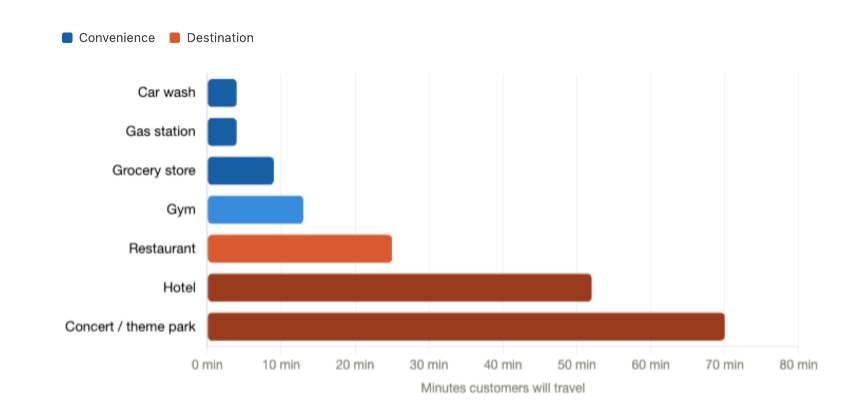
That means car wash demand is highly local.
A stronger operator across town may have little practical impact on a site if it sits outside the customer’s normal driving radius. Conversely, a weaker operator in the immediate trade area may be the more relevant competitor simply because it is convenient.
This creates a highly specific site-selection challenge - and a highly attractive opportunity for operators who understand how to evaluate demand at the neighborhood level, not just the market level.
The “Saturation” Question Is Often Misread
When investors see a growing number of express car washes in a major metro, the instinctive concern is saturation.
But saturation is not simply a function of how many locations exist in a region. It is a function of where those locations are, how well they operate, how strong their membership base is, and whether they actually compete for the same customers.
Large markets are made up of many small micromarkets.
A metro can look busy on paper while still containing meaningful whitespace at the site level. The key question is not whether competition exists in the broader market. The key question is whether a specific location can win its immediate convenience radius.
For AquaSonic, the opportunity is not based on a belief that competition does not exist. It is based on the belief that competition is often misunderstood. We do not need to win the entire metro. We need to win the right three-to-five-minute trade areas.
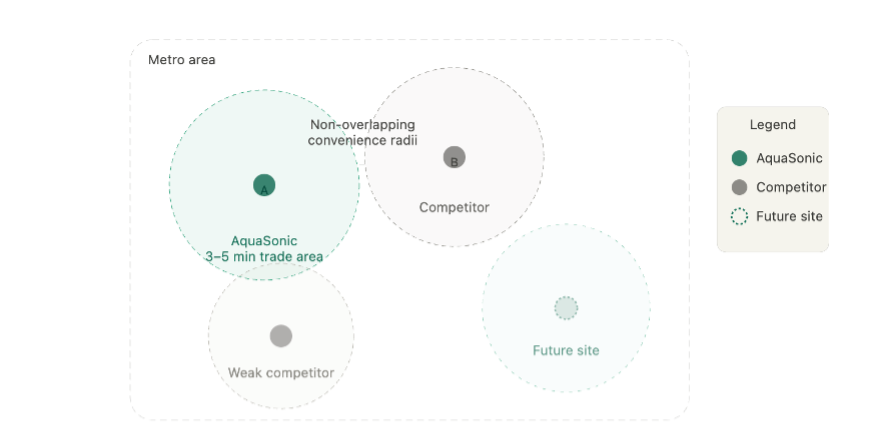
That means identifying underserved or under-optimized pockets within larger markets, where the right site, access, operations, brand, technology, and membership proposition can create a meaningful local advantage.
In car wash, the opportunity is not simply to enter a city. It is to understand where demand actually lives within that city - and to build where convenience, quality, and habit can compound.
Site Selection Is the Real Competitive Advantage
Because the market is hyper-local, site selection becomes one of the most important determinants of success.
A strong express car wash site is not just a piece of real estate. It is a customer-acquisition engine.
The most attractive sites combine:
High traffic counts
Strong visibility
Easy ingress and egress
Dense surrounding households
Favorable income demographics
Complementary retail adjacencies
Strong commuter and errand-based patterns
Limited high-quality immediate competition
A local customer base with repeat-use potential
At AquaSonic, we believe the best sites are not found by looking at a map and counting competitors. They are found by understanding the everyday movement patterns of customers.
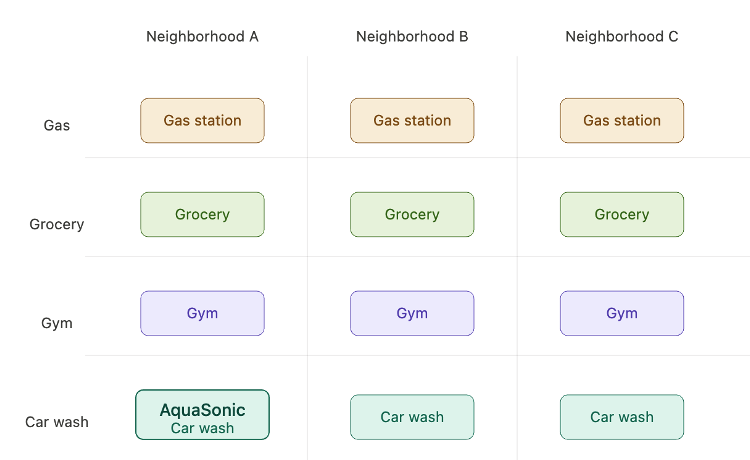
Where do people already drive? Where do they slow down? Where do they shop? Where do they commute? Where is a wash genuinely convenient?
That is the level at which car wash competition is won.
Competition Is Also an Operating Test
Competition should not be dismissed. It should be respected.
But in car wash, competition is not only a real estate question. It is an operating question.
Can the site acquire members efficiently? Can it retain them? Can it deliver a consistently better customer experience? Can it move cars quickly? Can it offer a better value proposition? Can it build trust locally? Can it make the decision easy for the customer? Is the quality of the local competition in a prospective market high or low?
At AquaSonic, we believe our advantage is not just that we build in attractive locations. It is that we combine site selection with a differentiated operating model.
Our platform is built around:
Membership growth
Localized marketing
Technology-enabled operations
Consistent customer experience
Strong wash quality
Fast throughput
Premium amenities
Data-led decision-making
The result is a business that is designed to compete site by site, customer by customer, and membership by membership.
Portfolio Strategy Helps De-Risk Local Competition
Single-site car wash investing can carry meaningful risk. One site, one trade area, one execution path.
A portfolio strategy changes that dynamic.
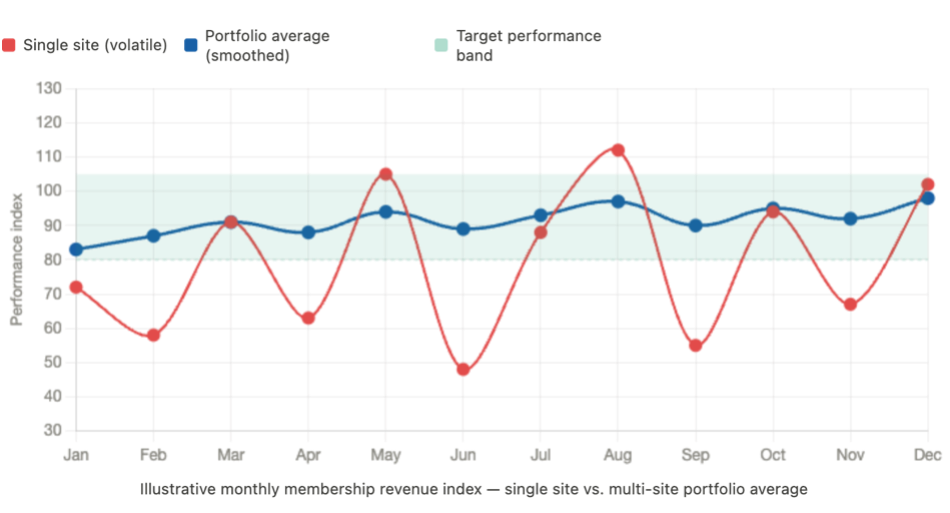
At the fund level, investors benefit from diversification across multiple micro-markets. A site that performs slightly below expectations does not define the entire investment. Stronger-performing sites can offset softer locations, while the broader platform benefits from shared marketing, operating learnings, procurement, technology, and management infrastructure.
This portfolio effect is particularly important in a category where the opportunity is local and repeatable.
Each site provides more data. Each opening improves the playbook. Each market teaches the platform how to acquire, convert, and retain customers more effectively.
The result is a compounding operating model.
Conclusion
The express car wash industry is competitive - but not in the way many investors assume.
The true competitive battlefield is not the entire metro. It is the immediate micromarket.
That is why the opportunity remains attractive for disciplined operators with strong site selection, strong execution, and a differentiated membership strategy.
AquaSonic’s early performance suggests that the platform is competing effectively where it matters most: at the local level, through recurring membership growth.
The first site proved the model. The second site showed the model improving.
For investors, that is the key message: AquaSonic is not betting on broad market growth alone. It is building a repeatable, data-led, membership-driven platform designed to win the right micro-markets, one site at a time.
For more information regarding Henley Car Wash and current investment opportunities available to accredited investors, please reach out to [email protected] or visit https://www.aquasoniccw.com/.
